 801 988 6800


Robocalls in Skilled Nursing Facilities: Risks to Residents, Staff, and Daily Operations
Key Takeaways
- Skilled nursing facilities face a combination of resident-protection, clinical-workflow, and administrative risks from unwanted automated calls.
- Direct-dial resident rooms, nursing stations, rehabilitation departments, and administrative lines can all provide entry points for robocalls.
- Residents have a right to private telephone communication, so protection should preserve access and privacy rather than unnecessarily restricting calls.
- Robocalls may interrupt care, expose residents to fraudulent messages, and add avoidable work for nurses, receptionists, social services, and administrative teams.
- Human-verification screening can stop automated calls before protected extensions ring while allowing legitimate people to continue.
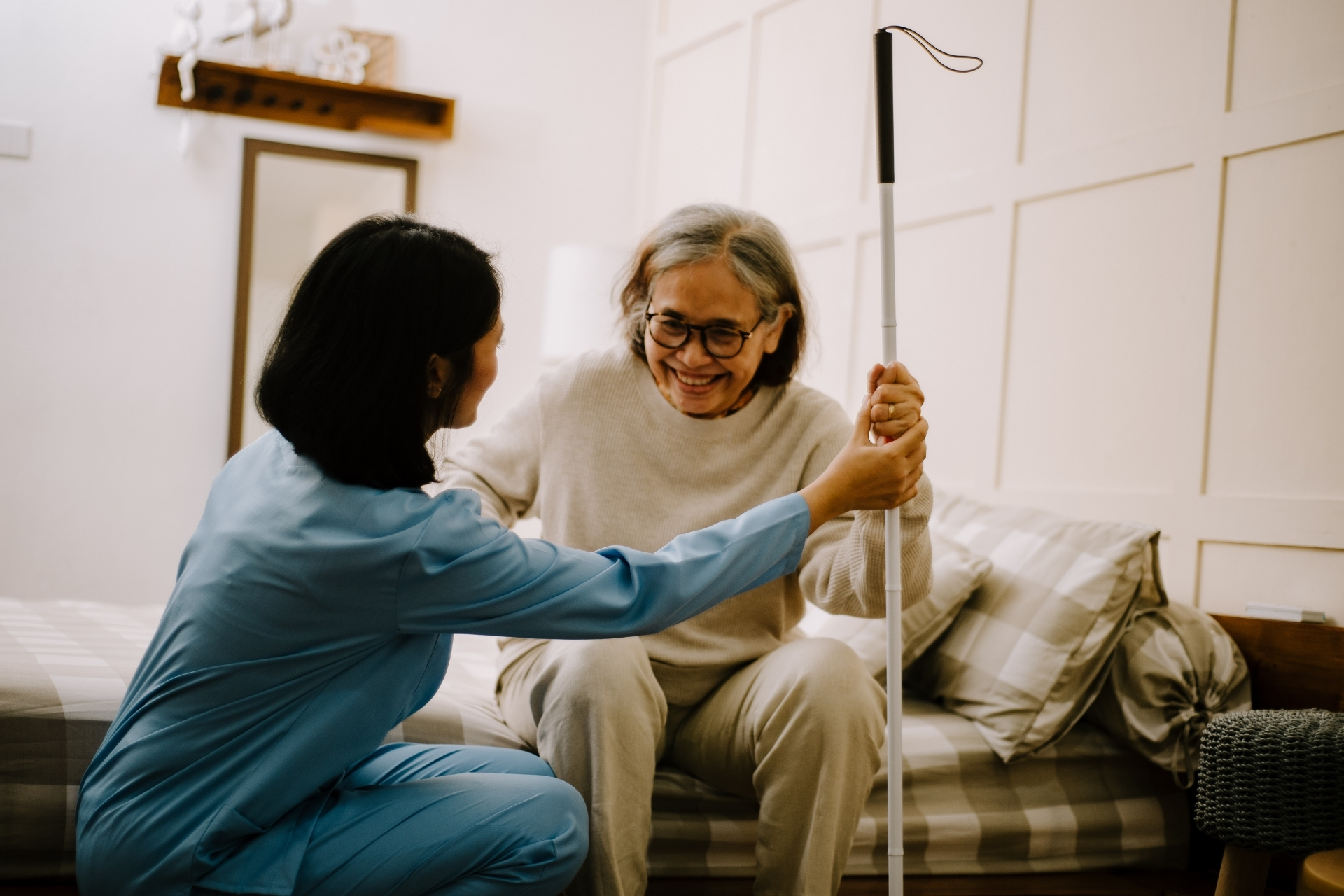
Skilled nursing facilities depend on reliable telephone communication throughout the day. Residents speak with family members, physicians, insurers, pharmacies, and other people involved in their care. Nurses coordinate with providers and respond to questions from families. Rehabilitation teams, social services, admissions, billing, transportation, and discharge planners communicate with organizations inside and outside the facility.
Unlike a typical residential community, an SNF combines a resident’s home and personal communications with 24-hour clinical operations.
That creates a complicated problem when robocalls enter the phone system. An automated call to a resident room may deliver a fraudulent Medicare offer, fake prescription message, government impersonation, or payment demand. A robocall to a nursing station can interrupt medication administration, documentation, a provider conversation, or another time-sensitive responsibility. Calls to admissions, billing, or social services can consume staff time and potentially begin a broader vishing attempt.
The facility cannot solve the problem by blocking every unfamiliar number. SNF residents and staff regularly receive legitimate calls from numbers they do not recognize. A hospital may call about a transfer. A pharmacy may use a centralized outbound number. A home health provider, medical-equipment company, transportation service, insurer, or family member may call for the first time.
Residents also retain communication and privacy rights. CMS states that residents of Medicare- or Medicaid-certified nursing homes have protections under federal and state law, including the right to make and receive private telephone calls.
Effective robocall protection must therefore accomplish two goals at the same time:
- Prevent automated calls from reaching protected residents and staff.
- Preserve reasonable access for legitimate human callers.
This article examines how robocalls affect SNFs differently from hospitals and independent senior living communities, where unwanted calls create the greatest operational exposure, and how facilities can add human-verification screening without replacing their existing phone infrastructure or interfering with resident communication.
Why Robocalls Create Distinct Risks in Skilled Nursing Facilities
Skilled nursing facilities share characteristics with both healthcare organizations and residential communities, but they are not identical to either.
They provide clinical and rehabilitative services while also serving as temporary or long-term homes. The telephone system must support care coordination, facility operations, personal communication, and transitions among different care settings.
Robocalls can interfere with each of these functions.
Residents may be managing complex health conditions and transitions
Some residents enter an SNF temporarily after hospitalization because they need skilled nursing, rehabilitation, or other services before returning home. Others require longer-term support.
Medicare describes SNF care as including skilled nursing and skilled therapy services, while resident care planning may involve professionals from several medical disciplines.
During an SNF stay, residents may receive legitimate calls involving:
- Hospital discharge or follow-up
- Medical appointments
- Prescription changes
- Therapy services
- Insurance coverage
- Medicare benefits
- Medical equipment
- Transportation
- Home health or hospice
- Financial arrangements
- Family care planning
Scammers can imitate these familiar subjects. A fraudulent caller may claim that a benefit is ending, equipment requires payment, an account needs verification, or a prescription cannot be processed without additional information.
The timing can make the call seem believable, particularly when the resident is already expecting contact from several unfamiliar organizations.
SNFs coordinate with many outside organizations
Skilled nursing care involves a broad network of hospitals, physicians, pharmacies, therapists, laboratories, insurers, transportation providers, equipment suppliers, and post-discharge services.
This creates a high volume of legitimate calls from numbers the facility may not already recognize.
A staff member cannot safely assume that every unfamiliar caller is unwanted. The person may be:
- A hospital employee coordinating a transfer
- A physician responding to a clinical question
- A pharmacy clarifying an order
- A laboratory communicating about testing
- An insurer requesting authorized information
- A transportation provider confirming an appointment
- A family member using a different telephone
- A community provider preparing for discharge
Scammers benefit from this complexity. They do not need to impersonate a specific person perfectly if the organization they claim to represent is one the facility routinely works with.
Nursing stations operate continuously
SNFs provide care around the clock. Nursing stations may receive calls during medication passes, shift changes, admissions, assessments, physician communications, changes in resident condition, and emergency response.
An unwanted automated call can require a nurse or other employee to:
- Pause the current task.
- Answer the phone.
- Listen long enough to determine whether the call is relevant.
- Disconnect or redirect it.
- Return to the original task and recover their place.
A single interruption may be brief. Repeated across several shifts, units, and facilities, these calls can become a persistent source of workflow friction.
This matters because nursing responsibilities require attention, documentation, judgment, and coordination. Phone lines should support those responsibilities rather than add avoidable automated traffic.
Shared lines can expose several departments
Some SNFs use central or shared numbers for nursing, rehabilitation, social services, admissions, billing, and administration. Calls may pass through reception or an automated attendant before reaching a department.
Other numbers may connect directly.
Potentially exposed destinations include:
- Resident rooms
- Nursing stations
- Admissions
- Rehabilitation departments
- Social services
- Medical records
- Billing and accounts receivable
- Human resources
- IT support
- Facility leadership
- Reception and operator lines
A consumer call-blocking application installed on one smartphone cannot protect this environment. Facility-level protection must account for shared phones, desk phones, analog resident extensions, and other endpoints that do not support mobile applications.
Short-stay turnover changes the calling environment
An SNF with a significant rehabilitation population may have frequent admissions, discharges, and room changes.
Each new resident can bring a different group of legitimate callers. Families, physicians, pharmacies, insurers, and community providers may need to reach the resident or care team for the first time.
This makes a fixed approved-caller list difficult to maintain. A number that is unfamiliar to the facility may still represent an important call.
Call protection should therefore avoid relying only on whether the organization has seen or approved a number before. The system needs a way to allow unfamiliar human callers while stopping automated calls.
Administrative departments may face vishing and payment fraud
Residents are not the only potential targets.
A caller may contact billing, payroll, human resources, procurement, or IT while pretending to represent:
- A vendor
- A bank
- A software provider
- An insurer
- A government agency
- Facility leadership
- A technology-support company
The caller may request credentials, payment details, employee information, a password reset, or a change to vendor banking instructions.
An automated message can begin the interaction by asking the employee to press a number or call another line. A human scammer may then take over.
Robocall screening can remove the automated part of this threat, but human-led requests still require verification procedures and employee training.
Resident communication rights limit overly restrictive approaches
Facilities have a responsibility to protect residents, but they must also respect residents’ rights, privacy, and personal choices.
Federal requirements recognize nursing home residents’ reasonable access to telephones, including private calls and appropriate accessibility services. Residents may also retain and use personal cellular phones at their own expense. www.law.cornell.edu
This makes broad restrictions inappropriate. A facility should not protect residents by unnecessarily monitoring conversations or preventing unfamiliar people from calling.
The more balanced approach is to screen for automation before the protected phone rings. This reduces unwanted robocalls while allowing human callers to proceed and residents to communicate privately.
How SNFs Can Stop Robocalls Before They Disrupt Residents and Staff
Skilled nursing facilities need a screening method that does not depend on staff or residents recognizing every suspicious number.
Caller ID and reputation-based filters can provide useful information, but robocallers may spoof numbers, rotate through newly activated numbers, or use numbers that have not yet received complaints. At the same time, an unfamiliar call may come from a legitimate provider involved in a resident’s care.
Human-verification screening addresses this problem by evaluating the caller’s response rather than relying only on the displayed number.
Add verification before the protected extension rings
When a call is placed to a protected SNF number, the caller hears a brief spoken instruction before the call can continue. The instruction may ask the caller to press a specified number on the keypad.
A person can hear the instruction and respond correctly. An automated caller programmed to dial numbers and play a recording cannot complete the challenge.
The call flow is simple:
- A caller dials a protected resident room, nursing station, or department.
- The screening system presents the human-verification challenge.
- A person completes the requested action and continues.
- A robocall that cannot respond is prevented from connecting.
- The protected phone does not ring for the stopped automated call.
This moves the screening decision away from the resident or employee answering the phone. The robocall is addressed before it can cause an interruption.
Allow unfamiliar care partners to connect
SNFs cannot restrict calls to numbers already stored in a directory.
A resident may have recently transferred from a hospital. A new specialist may be calling for the first time. A pharmacy, laboratory, insurer, or transportation provider may use a centralized number that staff do not recognize.
Human verification gives these callers a path to the intended destination without requiring prior approval.
A legitimate human caller does not need to:
- Be included on a permanent allowlist
- Call from a recognized number
- Install an application
- Use a specific carrier
- Have an established number reputation
- Ask an administrator to approve the number in advance
After completing the challenge, the caller can proceed to the resident, nursing unit, or department.
The facility may still configure known numbers and special call paths according to its operational requirements. Human verification provides an additional way to handle unfamiliar callers without treating them as automatically suspicious.
Protect different destinations according to their needs
The same screening principle can protect several parts of an SNF, although the routing configuration may differ.
| Protected destination | Primary purpose of screening |
|---|---|
| Resident rooms | Prevent automated scams and unwanted recordings from reaching residents |
| Nursing stations | Reduce interruptions during clinical work and care coordination |
| Admissions | Limit automated traffic while preserving calls from hospitals, residents, and families |
| Billing and administration | Reduce automated spam and the first stage of some fraud attempts |
| Social services and discharge planning | Preserve access for community providers while screening bots |
| Rehabilitation departments | Keep lines available for residents, families, therapists, and care partners |
| IT and help desks | Reduce automated contact that may precede technical-support or credential scams |
A facility can begin with the destinations experiencing the greatest risk or call volume and expand protection after testing the caller experience.
Define 100% robocall protection accurately
Human-verification screening can provide 100% protection against robocalls reaching covered SNF extensions. Automated callers that cannot complete the human-response challenge are prevented from connecting.
The claim applies to robocalls, not every potentially fraudulent call.
A human scammer may hear the instruction, enter the requested response, and continue with an impersonation or vishing attempt. The screening process confirms that the caller is a person; it does not confirm that the person is trustworthy.
SNFs should combine robocall protection with procedures for verifying callers who request:
- Resident information
- Insurance or Medicare details
- Account credentials
- Payment information
- Changes to vendor banking instructions
- Password or multifactor authentication resets
- Remote access to systems
- Exceptions to established privacy or security procedures
Work with the facility’s existing phone environment
SNFs may operate analog resident phones, legacy PBX equipment, VoIP platforms, SIP services, shared staff phones, or a combination of these technologies.
Screening at the facility or call-flow level allows protection to extend to phones that cannot run applications or display sophisticated spam warnings. The endpoint itself does not have to perform the verification.
This makes it possible to add robocall protection without replacing every room phone, desk phone, or communications platform.
The facility should still evaluate:
- Carrier and platform compatibility
- Inbound routing
- Direct-dial number ranges
- After-hours call handling
- Emergency and priority communications
- Accessibility requirements
- Failover procedures
- Multi-facility connections

Practical Steps for Implementing Robocall Protection in an SNF
A successful deployment must fit around resident rights, clinical workflows, existing telephone infrastructure, and the facility’s relationships with outside care partners.
SNFs can use the following steps to introduce protection without unnecessarily disrupting legitimate calls.
1. Map inbound numbers and call routes
Document how external calls enter the facility and where they go.
The review should include:
- Main facility numbers
- Direct-dial resident extensions
- Nursing stations
- Admissions
- Rehabilitation and therapy departments
- Social services and discharge planning
- Billing and administration
- After-hours routing
- Automated attendants
- Voicemail and forwarding rules
- Emergency or priority call paths
This helps identify which destinations receive the most robocalls and where screening should occur.
2. Prioritize high-exposure extensions
The facility does not have to protect every number at once.
An initial deployment might focus on:
- Resident rooms receiving repeated unwanted calls
- Nursing stations experiencing frequent interruptions
- Admissions lines exposed to high call volume
- Billing or administrative departments targeted by automated messages
- Direct-dial numbers that bypass reception
Prioritization allows the SNF to address the clearest risks while limiting the scope of early testing.
3. Involve clinical and operational teams
Call protection should not be configured only by IT or a telephone vendor. Nursing, resident services, admissions, social services, compliance, and administration understand how calls affect care and daily operations.
Together, these teams can determine:
- Which destinations require screening
- Which call paths need alternate handling
- How residents and families will be informed
- How accessibility needs will be addressed
- Who will handle caller difficulties
- How suspicious calls will be reported
- When an incident should be escalated
This reduces the risk of solving a technical problem while creating a clinical or resident-experience problem.
4. Test with realistic callers
Before a broader rollout, test the verification process using people and organizations that commonly contact the facility.
Test scenarios should include calls from:
- Hospitals coordinating admissions or transfers
- Physicians
- Pharmacies and laboratories
- Resident family members
- Insurers
- Transportation services
- Home health and hospice providers
- Medical-equipment suppliers
- Unknown mobile and landline numbers
The facility should confirm that human callers can hear the instruction, complete the challenge, and reach the correct destination.
Testing should also address hearing, speech, language, dexterity, and other accessibility needs. Alternate routing may be necessary when a standard keypad challenge is not appropriate.
5. Communicate the change clearly
Residents, families, staff, and frequent care partners should understand what to expect.
A short notice can explain that:
- Callers may hear a brief verification instruction.
- Human callers can continue after completing it.
- The purpose is to prevent automated calls from reaching protected phones.
- The system does not monitor private conversations.
- Residents and staff should still verify suspicious human callers.
- Assistance is available if someone has difficulty connecting.
Clear communication reduces confusion and reinforces that the facility is protecting access rather than restricting it.
6. Monitor and refine the deployment
After launch, the facility should review:
- Whether robocalls are still reaching protected extensions
- Whether legitimate callers are completing verification
- Whether residents or families report access problems
- Which numbers or departments receive the most attempts
- Whether routing or accessibility adjustments are needed
- Whether protection should expand to other extensions
Multi-facility operators can use these findings to establish a standard rollout process while accommodating differences in telephone systems and resident populations.
Robocall protection should remain an operational program rather than a one-time installation. Periodic review helps the SNF maintain protection as residents, care partners, phone systems, and facility workflows change.
Frequently Asked Questions
Can an SNF stop all robocalls from reaching resident rooms?
Human-verification screening can provide 100% protection against robocalls reaching covered extensions. Automated callers that cannot understand and complete the required response are prevented from connecting.
This applies specifically to automated calls. A human scammer may pass the challenge, so facilities still need caller-verification procedures and resident and employee education.
Will screening block calls from hospitals, physicians, or family members?
Legitimate human callers can complete the verification challenge and proceed, even when calling from an unfamiliar number. They do not need to install an application or have their number approved in advance.
The SNF should test frequent care-partner call paths and provide alternate handling for accessibility or operational exceptions.
Can robocall protection work with analog resident phones?
Yes. Facility-level screening occurs before the call reaches the endpoint, so protection does not depend on the resident phone supporting an application or spam-labeling feature.
Compatibility with the SNF’s particular PBX, VoIP, SIP, carrier, and routing environment should be assessed before deployment.
Does call screening violate residents’ telephone privacy?
Human-verification screening evaluates the caller before connection; it does not require staff to listen to the resident’s private conversation. SNFs should still evaluate how a proposed system processes call information and ensure that its configuration supports residents’ communication and privacy rights.
Does a robocall blocker prevent vishing and phone fraud?
It can prevent automated vishing messages from reaching protected extensions. It cannot determine whether a human caller who completes verification is honest.
SNFs should combine robocall blocking with staff training, resident education, identity-verification procedures, privacy safeguards, access controls, and an established process for reporting suspicious calls.

Final Thoughts
Skilled nursing facilities can stop automated calls before they interrupt care or reach residents while preserving access for families, hospitals, physicians, pharmacies, and other legitimate care partners. Callegra Hospital Robocall Blocker uses human-verification screening to provide 100% robocall protection for covered extensions and integrates with existing PBX and VoIP environments.
Schedule a consultation with Callegra Technologies to explore call protection for your skilled nursing facility without a disruptive phone-system replacement.
Recent Blogs