 801 988 6800


How Senior Living Communities Can Protect Residents From Robocalls and Phone Scams
Key Takeaways
- Scammers target older adults through impersonation, technical-support, government, investment, family-emergency, and other phone-based schemes.
- Direct-dial resident phones can allow robocalls to reach people without first passing through a receptionist or staff member.
- Protecting residents should not mean taking away their independence or restricting legitimate contact with family, friends, healthcare providers, and community services.
- Caller ID, spam labels, blocklists, and resident education can help, but they may not stop newly used, spoofed, or previously unreported numbers.
- Human-verification screening can stop automated calls before resident phones ring while continuing to connect legitimate human callers.
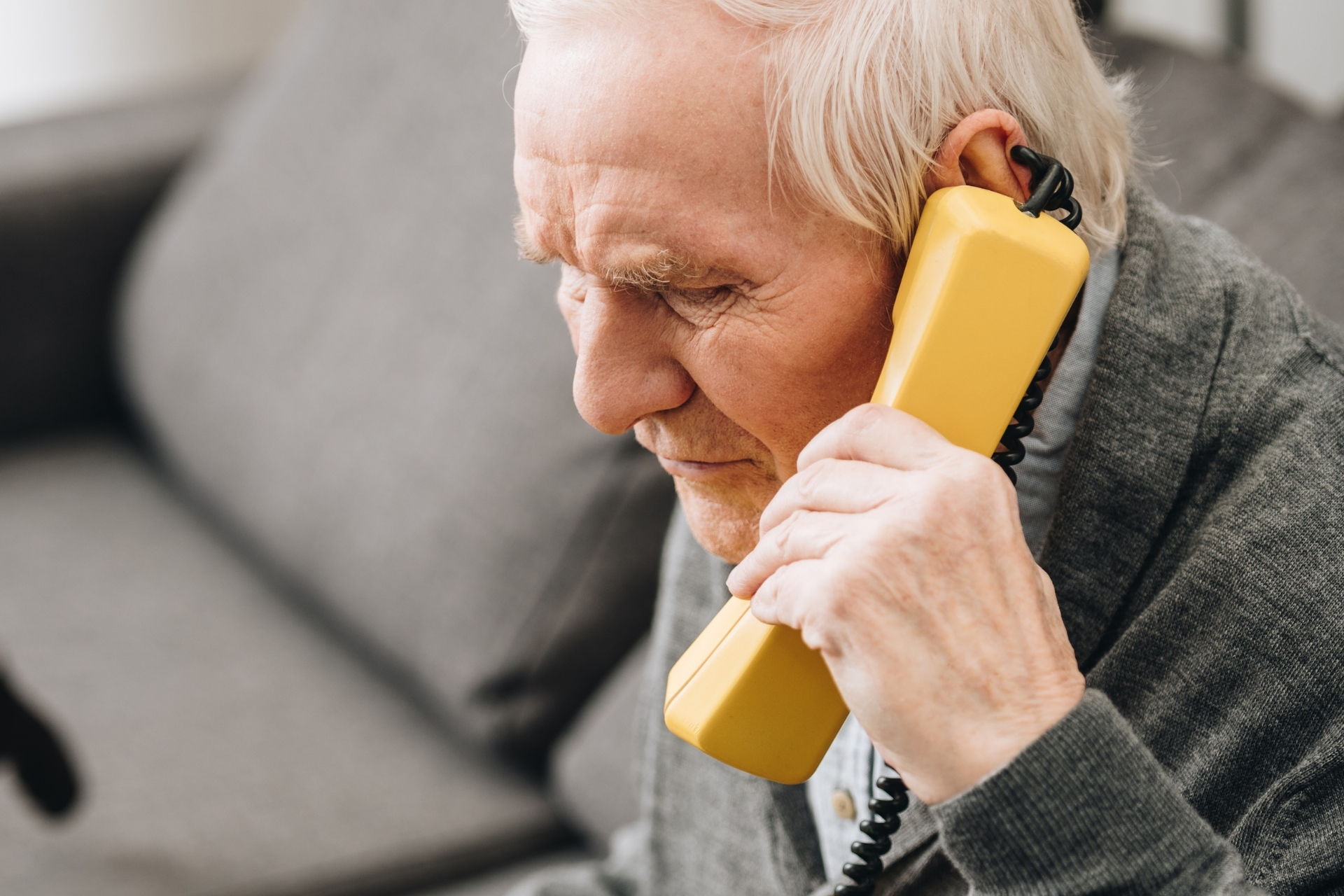
Telephone access is part of daily life in a senior living community. Residents use their phones to stay connected with family and friends, speak with healthcare providers, manage appointments, contact financial institutions, and maintain relationships outside the community. For many, the telephone also represents independence: they can decide whom to speak with and when, without every conversation passing through a staff member.
That access can also create an opening for robocalls and phone scams. Scammers may impersonate government agencies, banks, insurers, pharmacies, technical-support companies, law enforcement officers, or even family members. Some begin with an automated message and then transfer the recipient to a person who applies pressure, creates urgency, or asks for money and sensitive information.
The scale of elder fraud makes this more than a hypothetical concern. According to the FBI’s 2025 Internet Crime Complaint Center data, people over 60 submitted more than 201,000 complaints and reported losses exceeding $7.7 billion. Phishing and spoofing generated the largest number of complaints from this age group. These figures represent reported incidents, not every scam attempt or loss.
Older adults are not automatically unable to recognize scams, and age alone should not be treated as evidence that someone cannot manage their communications. People of every age fall victim to carefully designed fraud.
However, scammers may deliberately target older adults because they assume potential victims have retirement income, savings, established credit, or valuable assets. Within senior living, some residents may also be managing illness, medication effects, grief, cognitive change, or unfamiliar financial and healthcare arrangements. These circumstances can make a well-timed call more difficult to evaluate.
Senior living operators therefore face a delicate responsibility. They want to protect residents from predictable harm without unnecessarily monitoring conversations, limiting personal choice, or making it harder for legitimate callers to connect.
The goal is not to control whom residents speak with. It is to reduce the number of unwanted automated calls that reach them in the first place and provide practical support for handling suspicious human callers.
A layered approach can include resident education, staff procedures, family involvement when authorized, incident reporting, and human-verification screening at the facility phone-system level. Together, these measures can strengthen resident protection while preserving privacy, dignity, independence, and trusted communication.
Why Senior Living Residents Are Frequently Targeted by Phone Scammers
Scammers target people across every age group. Older adults are not inherently more trusting, less informed, or less capable of managing their finances and communications.
However, criminals often select targets based on assumptions about their circumstances. They may believe an older person has accumulated savings, receives regular retirement income, owns property, or is less likely to report an embarrassing financial loss.
Senior living communities can also provide something scammers value: direct telephone access to a concentrated population of older adults.
Telephone calls remain an important form of communication
Many older adults are comfortable using telephones and may prefer calls over email, text messaging, or online portals for important conversations.
A resident may reasonably expect calls from:
- Family members and friends
- Physicians and pharmacies
- Medicare or an insurance provider
- Banks and financial institutions
- Government agencies
- Community organizations
- Utilities and service providers
- Transportation services
- The senior living community itself
Scammers impersonate these same types of organizations because the call fits naturally into the resident’s daily life.
A message about a prescription, insurance benefit, bank transaction, family emergency, or government account may not seem unusual at first. The scam becomes effective when the caller adds urgency and discourages the resident from independently verifying the story.
Direct-dial resident phones can bypass staff
Senior living communities may provide private telephone access in resident rooms or apartments. This supports dignity and independence by allowing residents to communicate without every call being routed through reception.
It also means an outside caller may reach a resident without interacting with a staff member first.
The caller does not necessarily need to know the resident’s name or room number. Automated dialing systems can call blocks of telephone numbers until someone answers. A prerecorded message may then prompt the resident to press a number, call another line, or wait for a supposed representative.
Once the resident responds, a human scammer can take over the interaction.
Staff may not know that the call occurred unless the resident mentions it, asks for assistance, or experiences a financial or privacy-related consequence.
Scammers use authority, familiarity, and urgency
Most successful phone scams do not depend on advanced technical skills. They depend on creating a believable reason for the recipient to act before checking the story.
The caller may claim that:
- A government benefit is about to be suspended.
- The resident owes a tax, fee, or legal penalty.
- A bank account has been compromised.
- A computer or device contains a virus.
- A family member has been arrested or injured.
- A prescription or medical device requires payment.
- The resident has won a prize but must first pay a fee.
- An investment opportunity will disappear unless they act immediately.
The caller may also instruct the resident not to speak with family, staff, a bank employee, or law enforcement. Secrecy gives the scammer more control and reduces the chance that another person will question the request.
The FTC warns that business and government impersonators may create a false crisis and then offer fraudulent “help,” sometimes pressuring older adults to move or surrender substantial savings.
Common phone scams targeting older adults
Senior living communities should prepare residents and staff for several recurring schemes.
Government impersonation scams
The caller may claim to represent Social Security, Medicare, the IRS, law enforcement, the FTC, or another agency. They may threaten arrest, account suspension, loss of benefits, or other consequences unless the resident provides information or sends money.
Government agencies do not use unexpected calls to demand payment through gift cards, cryptocurrency, cash couriers, or wire transfers.
Technical-support scams
A caller may claim that the resident’s computer, mobile device, bank account, online-shopping account, or security software has been compromised.
The scammer may request remote access to a device, ask for login information, or instruct the resident to transfer funds to a supposedly safe account. The FBI notes that technical-support fraud can begin through unsolicited calls or messages from criminals impersonating legitimate companies.
Family-emergency scams
A caller may pretend to be a grandchild, another relative, an attorney, a police officer, or a medical professional. The story typically involves an arrest, accident, hospitalization, travel problem, or other urgent event.
The resident may be told to send money immediately and keep the situation secret. Voice-cloning technology can make impersonation more convincing, but many schemes still succeed through ordinary acting, pressure, and information gathered online.
Healthcare and insurance scams
A caller may impersonate Medicare, an insurer, a pharmacy, a medical-device company, or a healthcare provider.
The goal may be to obtain:
- A Medicare or insurance identifier
- A Social Security number
- Payment information
- An address or date of birth
- Consent for an unwanted product or service
- Other details that can support identity or benefits fraud
Because residents regularly interact with healthcare organizations, these calls may sound routine until the caller requests information or payment.
Sweepstakes and prize scams
The resident is told that they have won money, a vehicle, a vacation, or another prize but must first pay taxes, processing costs, or delivery fees.
The scammer may continue requesting additional payments after the first one is made.
Investment and financial impersonation scams
A caller may promote a supposedly low-risk investment or claim that the resident’s existing funds are in danger.
Some scammers impersonate bank fraud departments or government investigators and tell victims to transfer money, purchase cryptocurrency, withdraw cash, or buy precious metals for “safekeeping.”
The FBI lists technical-support, government-impersonation, grandparent, romance, lottery, and investment schemes among the recurring frauds targeting older adults.
Robocalls can serve as the first stage of a larger scam
Not every phone scam begins with a live person.
An automated system can place calls at scale, deliver a prerecorded message, and identify recipients who respond. The robocall may ask the resident to:
- Press a number to speak with an agent
- Confirm information using the keypad
- Call a different number
- Remain on the line for assistance
- Respond to an offer or warning
A live scammer can then continue the conversation with people who have already shown interest or concern.
This makes robocall prevention valuable even though it cannot stop every human-led scam. Preventing the automated call from reaching the resident removes one method criminals use to initiate contact, test active numbers, and identify potential targets.
Protection should preserve resident autonomy
Senior living communities should not respond by treating every resident as incapable of managing a phone call.
Overly restrictive controls can isolate residents, interfere with family contact, and undermine their independence. Monitoring private conversations may also create privacy and trust concerns.
A more balanced approach is to:
- Stop automated calls before resident phones ring.
- Teach residents how common scams create urgency and secrecy.
- Give residents an easy way to ask staff for help.
- Establish procedures for reporting suspicious calls.
- Involve family members or authorized representatives when appropriate.
- Allow legitimate human callers to continue connecting.
The objective is to reduce preventable exposure while respecting each resident’s choices, privacy, and ability to communicate freely.
How Senior Living Communities Can Protect Residents Without Restricting Communication
Effective resident protection should reduce exposure to unwanted calls without unnecessarily limiting residents’ independence, privacy, or contact with the people and services they trust.
That requires more than telling residents not to answer unfamiliar numbers. Family members, physicians, pharmacies, financial institutions, government agencies, and other legitimate callers may use numbers the resident does not recognize.
A balanced approach combines automated-call screening with education, staff support, reporting procedures, and safeguards for suspicious human callers.
Stop automated calls before resident phones ring
Human-verification screening can prevent robocalls from reaching protected resident extensions.
When an inbound caller tries to reach a protected number, the system plays a simple spoken instruction, such as asking the caller to press a specified number. A person can hear the instruction and respond correctly. A robocall programmed to play a prerecorded message cannot complete the challenge.
The process follows a straightforward path:
- A caller dials a protected resident or facility number.
- The caller receives a brief human-verification challenge.
- A person completes the requested action and continues.
- An automated caller that cannot respond is prevented from connecting.
- The protected phone never rings for the blocked robocall.
Because screening occurs before the call reaches the resident, the resident does not have to answer, listen to the message, or decide whether the automated call is safe.
Allow unfamiliar human callers to connect
Protecting residents should not require the community to maintain an exhaustive list of every legitimate caller.
A resident’s relative may call from a new phone. A healthcare provider may use a different outbound number. A friend may call while traveling. Pharmacies, banks, insurers, transportation services, and government offices may use multiple numbers.
Human verification allows these callers to demonstrate that they are people during the call. They do not have to:
- Register with the community in advance
- Call from an approved number
- Install an application
- Appear in the resident’s contact list
- Have an established number reputation
- Ask a staff member to connect every call
Once the caller completes the challenge, the call proceeds to the resident or intended facility extension.
Known or trusted numbers may also be handled according to the community’s call-routing policies. The key is that unfamiliar human callers still have a practical way to connect.
Understand what 100% robocall protection means
Human-verification screening can provide 100% protection against robocalls reaching protected extensions because automated callers cannot understand and complete the required human-response challenge.
The scope of that protection should remain clear.
It means that automated calls are prevented from reaching protected resident phones. It does not mean the system determines whether every human caller is honest.
A human scammer may listen to the instruction, press the requested number, and continue with an impersonation or vishing attempt. That is why automated-call screening should be combined with resident education and procedures for suspicious human callers.
Teach residents to pause and verify
Scammers frequently try to prevent careful thinking by creating urgency, fear, excitement, or secrecy.
Residents should be encouraged to pause whenever an unexpected caller:
- Demands immediate payment
- Threatens arrest, fines, or loss of benefits
- Claims a relative is in an emergency
- Requests a password or security code
- Asks for remote access to a device
- Instructs the resident to buy gift cards or cryptocurrency
- Requests cash, gold, or another valuable item through a courier
- Tells the resident not to speak with family or staff
- Pressures the resident to remain on the line
The safest response is usually to end the call and independently contact the supposed person or organization using a trusted number.
Residents should also know that caller ID is not proof of identity. A scammer can manipulate the displayed information to resemble a government agency, bank, healthcare provider, or local organization.
Make it easy to ask staff for help
Residents may hesitate to report a suspicious call because they are embarrassed, uncertain, or concerned that doing so could lead others to question their independence.
Communities can reduce that hesitation by treating scam reporting as a normal safety practice—not evidence that the resident did something wrong.
Staff can reinforce simple messages:
- Anyone can be targeted by a convincing scam.
- Asking for a second opinion is a sign of caution, not incapacity.
- Residents will not be blamed for reporting an attempt.
- Staff can help verify a caller without taking control of the resident’s decisions.
- Early reporting may prevent additional loss or protect other residents.
A resident should have an obvious way to request assistance, whether through reception, resident services, security, social services, or another designated team.
Establish a response process for suspicious calls
When a resident or employee reports a suspicious call, staff should know what information to collect and whom to notify.
Useful details may include:
- The date and approximate time of the call
- The number shown on caller ID
- The person or organization the caller claimed to represent
- What information or payment the caller requested
- Whether the resident disclosed personal information
- Whether money was sent or an account was accessed
- Whether the caller mentioned another resident or employee
- Whether similar calls reached other extensions
If financial information, credentials, or personal data may have been exposed, the community should follow its established privacy, security, risk-management, and incident-response procedures.
Suspected fraud can also be reported through the FBI’s Internet Crime Complaint Center and the FTC’s ReportFraud.gov. The Department of Justice’s National Elder Fraud Hotline can help adults age 60 and older report suspected fraud and connect with appropriate resources.
Involve families and representatives appropriately
Family members and authorized representatives can help residents recognize changes in scam tactics, verify suspicious stories, and respond quickly when financial or personal information may have been exposed.
However, involvement should reflect the resident’s wishes, legal authority, care plan, and the community’s privacy obligations. Protecting someone from fraud does not automatically justify monitoring their calls or sharing information without authorization.
Communities can instead encourage residents and families to agree on practical safeguards, such as:
- A family verification word for emergency calls
- A trusted contact the resident can call before sending money
- Alerts for unusual financial transactions
- Clear expectations about how family members will request assistance
- A shared understanding that legitimate relatives will not demand secrecy
This preserves the resident’s agency while creating additional opportunities to interrupt a scam.
Human-verification screening removes automated calls before they reach residents. Education, staff support, family coordination, and incident response address the human-led scams that remain. Together, these measures protect residents without turning their private communications into a controlled or monitored experience.

How Senior Living Operators Can Implement Call Protection Across Their Communities
Adding robocall protection to a senior living community requires more than enabling a feature on individual phones. Operators must consider different levels of care, resident preferences, facility infrastructure, accessibility, and the way calls move across one or several properties.
The implementation should protect residents consistently without changing the community into a closed communications environment.
Identify which numbers and residents are exposed
The first step is to map the community’s inbound call environment.
This may include:
- Direct-dial resident apartments and rooms
- Reception and concierge desks
- Nursing stations
- Wellness and medication-management offices
- Admissions and sales departments
- Billing and administrative offices
- Memory care units
- Skilled nursing or rehabilitation areas
- After-hours and emergency call routes
- Numbers shared across multiple communities
Independent living, assisted living, memory care, and skilled nursing areas may use different phone systems or call-handling practices. Operators should identify where calls reach residents directly and where staff already serve as intermediaries.
The purpose is not to assume that every resident needs identical protection. It is to understand where automated calls can enter and which destinations experience the greatest exposure.
Account for different telephone technologies
Senior living properties may use a combination of:
- Legacy PBX equipment
- Analog room phones
- VoIP platforms
- SIP services
- Mobile devices
- Front-desk call routing
- Systems inherited through acquisitions
Consumer call-blocking applications cannot protect every type of endpoint. An analog phone in a resident apartment, for example, may not display spam labels or support downloadable applications.
Facility-level screening can protect calls before they reach these devices. This allows operators to add robocall protection without requiring every resident to own a smartphone or learn new software.
Adapt protection to different care settings
The appropriate call flow may vary across a senior living campus.
In independent living, residents may expect calls to connect directly after verification. In assisted living or skilled nursing, the community may need different routing for certain extensions. Memory care settings may require additional involvement from staff or authorized representatives.
Operators should work with clinical, resident-services, legal, privacy, and technology teams to determine:
- Which destinations should receive human-verification screening
- Whether any trusted numbers should receive alternate handling
- Which calls should route through reception
- How residents can request or decline available protections
- How authorized representatives should be involved
- What accommodations are needed for callers with disabilities
- How emergency and time-sensitive calls will be handled
These decisions should reflect resident rights, care needs, operational requirements, and applicable regulations.
Test the experience with real caller scenarios
Before expanding screening across a property, the community should test calls from the people and organizations residents commonly hear from.
Testing should include:
- Family members using known and unfamiliar numbers
- Physicians and pharmacies
- Home health and hospice providers
- Hospitals and outpatient clinics
- Banks and insurers
- Transportation services
- Government and community organizations
- Landlines and mobile phones
The operator should confirm that callers can hear the instruction, provide the requested response, and reach the correct destination without unreasonable difficulty.
Testing should also consider people who may have hearing, speech, language, dexterity, or cognitive accessibility needs. Alternate routing may be necessary when a standard keypad challenge is not appropriate.
Begin with a controlled rollout
A community can start with a limited set of extensions or one part of the property before expanding protection.
A pilot might prioritize:
- Resident phones receiving repeated robocalls
- A specific residential wing
- Nursing or wellness stations
- Reception
- Administrative departments frequently targeted by spam
During the pilot, operators can collect feedback from residents, families, staff, and telecom administrators. They can then adjust call routing, instructions, support materials, or escalation procedures before a wider rollout.
Standardize protection across multiple properties
Multi-community operators may have inconsistent phone environments because of property age, regional vendors, acquisitions, and previous technology decisions.
A scalable program should establish common objectives while allowing for local differences.
The organization can define:
- Minimum call-protection requirements
- Standard resident and family communications
- Staff reporting and escalation procedures
- Approved deployment and testing practices
- Roles for corporate and local teams
- Periodic reviews of call-screening performance
- A process for adding newly acquired properties
This creates a consistent resident-protection standard without requiring every community to replace its phone system at the same time.
Communicate changes before deployment
Residents and families should understand what the new screening process does and what it does not do.
Communications should explain that:
- Human callers may hear a brief instruction before connecting.
- The purpose is to stop automated calls from reaching protected phones.
- Legitimate callers can continue after completing the challenge.
- The system does not determine whether every human caller is trustworthy.
- Residents should still pause and verify suspicious requests.
- Help is available if a caller or resident has difficulty with the process.
Clear communication reduces confusion and helps families understand that the community is strengthening protection without monitoring private conversations or limiting ordinary contact.

Frequently Asked Questions
Why are senior living residents targeted by phone scammers?
Scammers may assume older adults have savings, retirement income, established credit, government benefits, or valuable assets. Direct-dial resident phones can also give outside callers access without first speaking with reception or another staff member.
This does not mean older adults are inherently more likely to believe a scam. Fraudsters target people of every age and use urgency, authority, fear, familiarity, and secrecy to make their stories convincing.
Can a senior living community block robocalls without monitoring residents’ conversations?
Yes. Human-verification screening takes place before the call reaches the protected resident phone. It evaluates whether the caller can complete a simple instruction; it does not require staff to listen to the resident’s conversation.
The community should still review how any proposed system handles call information, verification data, administrative access, and privacy.
Will call screening prevent family members from reaching residents?
Human family members can complete the verification challenge and continue to the resident’s phone, even when calling from an unfamiliar number. They do not need to install an application or register every telephone number in advance.
Communities should explain the process to residents and families before deployment and provide an alternate route for callers who cannot complete the standard challenge.
Can a senior living community stop 100% of robocalls?
Human-verification screening can provide 100% protection against robocalls reaching protected extensions. Automated calls that cannot understand and complete the human-response challenge are prevented from connecting.
This does not mean the system stops every fraudulent call. A human scammer may pass the challenge and must be addressed through resident education, staff support, verification procedures, and incident response.
Does facility-level robocall protection cover residents’ personal mobile phones?
Facility-level screening protects telephone numbers and extensions routed through the community’s covered phone environment. It does not automatically protect a resident’s personal cellular number if calls to that device do not pass through the facility’s system.
Residents may still use carrier tools, device settings, or consumer call-blocking features for their personal mobile phones.
Can robocall screening detect AI voice cloning?
Human-verification screening determines whether the caller can respond to an instruction. It does not analyze a voice to decide whether it is natural or artificially generated.
A fully automated AI call that cannot complete the challenge will be stopped. A human scammer using cloned audio or another voice-manipulation tool may still pass, so residents should independently verify urgent or unusual requests.
What should staff do if a resident may have responded to a scam?
Staff should remain calm, avoid blaming the resident, and follow the community’s established escalation procedure. The response may involve documenting the call, contacting an authorized representative, notifying financial institutions, changing exposed credentials, preserving relevant information, and involving privacy, security, legal, or law-enforcement personnel when appropriate.
Acting quickly may help limit further loss and prevent the same campaign from targeting other residents. Suspected fraud can be reported to the FBI’s Internet Crime Complaint Center or the FTC through ReportFraud.gov.

Final Thoughts
Senior living communities can reduce residents’ exposure to automated scams without limiting their independence or making it harder for family, friends, and care providers to connect. Callegra Hospital Robocall Blocker uses human-verification screening to provide 100% robocall protection for covered resident rooms and facility extensions while working with existing PBX and VoIP environments.
Schedule a consultation with Callegra Technologies to explore a resident-focused call-protection approach for your senior living community.
Recent Blogs